Introduction
I still remember the first time I walked through the doors of the Richard Crossman Building. I had no idea a university building could feel so… alive. One minute I was standing in a bright, modern reception area, and the next I was peering into a replica prison cell and watching a student strap on a 3D headset inside a giant VR cave.
If you’re thinking about studying psychology, criminology or social sciences at Coventry University, you’ve almost certainly heard the name. But the Coventry Richard Crossman Building is far more than a place where lectures happen. It’s a hands-on learning hub where you can role-play being a police officer, observe human behaviour through one-way glass, and explore how light affects emotion — all under one roof.
In this article, I’ll walk you through everything this fascinating building has to offer, share some honest pros and cons, and give you practical tips so you know exactly what to expect before you visit.
What Is the Coventry Richard Crossman Building?
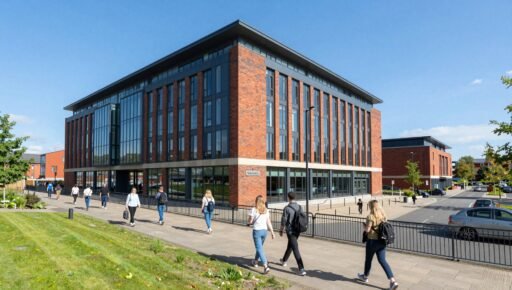
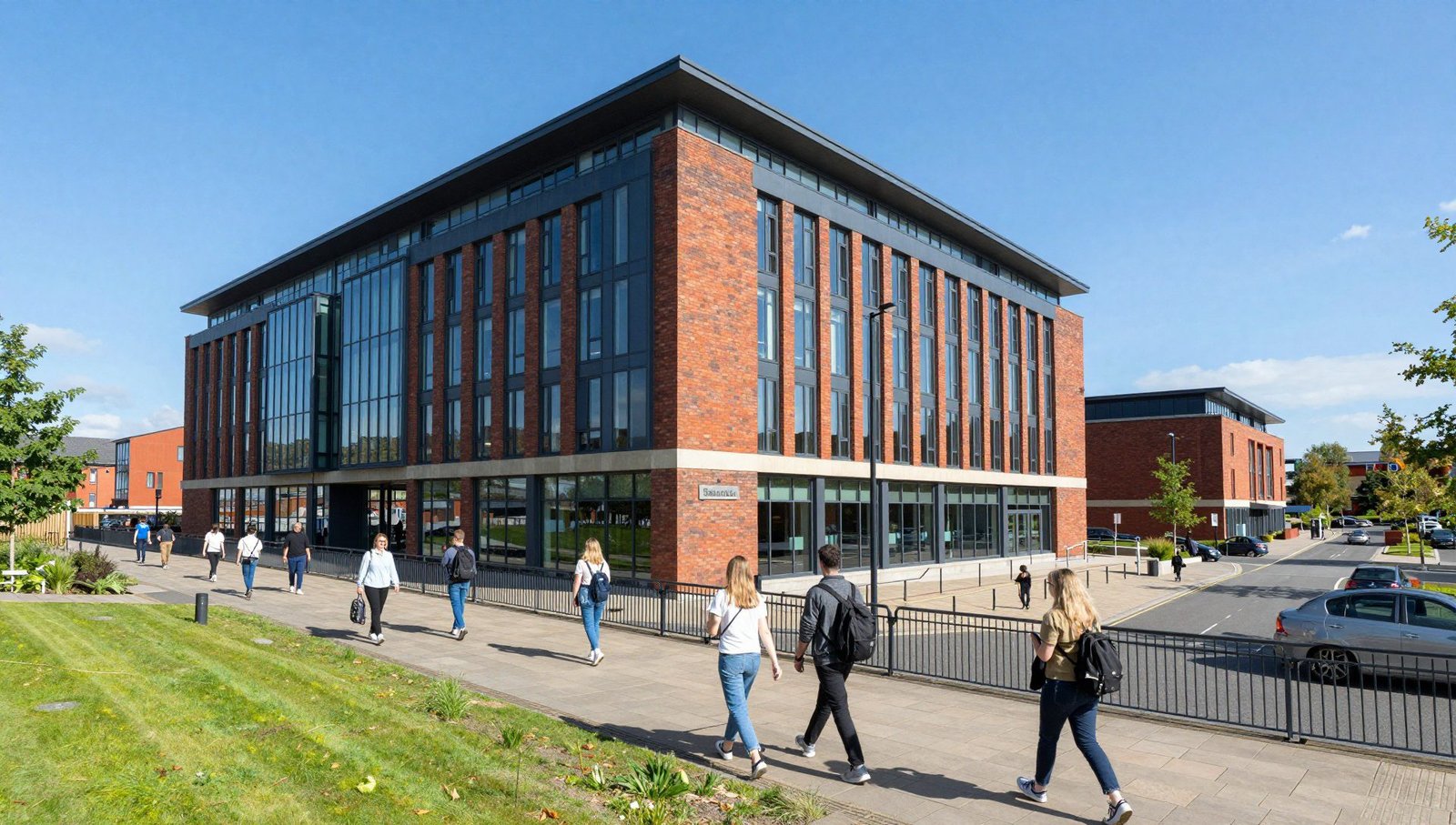
Put simply, the Richard Crossman Building is Coventry University’s dedicated home for the study of human behaviour and society. It’s a four-storey facility located right in the heart of the city campus, and it’s used mainly by students and researchers in psychology, criminology and the social sciences.
What makes it special, though, is how much it packs into those four storeys. This isn’t a building full of just lecture theatres and seminar rooms (although it has those too). Instead, it’s designed to give students realistic, practical experiences that prepare them for real careers.
Need to understand what it feels like to be in custody? There’s a cell for that. Want to practise counselling a client in a private, realistic setting? There are dedicated counselling rooms. Fancy exploring the inside of the human body without leaving Coventry? The VR CAVE has you covered.
The building is part of the Faculty of Health and Life Sciences, and it’s used for undergraduate and postgraduate teaching. In my experience, it’s one of those places that makes you forget you’re in a classroom — because you’re too busy actually doing the thing you’re learning about.
Where Exactly Is the Building Located?
Location matters, especially when you’re lugging books across campus in the January rain. The Richard Crossman Building is on Jordan Well, with the postcode CV1 5RW. It’s directly opposite The Hub — Coventry University’s lively social and learning space — and it sits right next door to the Ellen Terry Building.
Here are the key practical details:
- Address: Jordan Wl, Coventry CV1 5RW
- Opening hours: Monday to Friday, 8.30am to 5pm
- Phone: 024 7765 6565
The location is genuinely handy. Because it’s so central, you’re within easy walking distance of the Lanchester Library, the Students’ Union, and most of the main campus facilities. If you’re coming by bus, the main Coventry transport links are close by, and the city centre is only a short stroll away.
One thing I’d say from experience: give yourself a few extra minutes on your first visit. The campus can feel like a maze, and the building itself is easy to spot once you know what you’re looking for — but your first trip might involve a bit of wandering. There are campus maps available online, and you can always ask a student ambassador for directions.
A Full Tour of the Facilities
This is where the building really earns its reputation. Let me walk you through the standout facilities, because honestly, this list reads more like a wish list than a university building specification.
The VR CAVE
The crown jewel of the building is the VR CAVE. It’s an advanced, fully immersive space where a giant simulation screen covers three walls. Using 3D headsets, students can step into realistic healthcare scenarios, practise clinical skills, interact with simulated patients, and even explore the human body in incredible detail.
During my visit, I watched a nursing student walk into a virtual operating theatre and respond to a simulated emergency. The realism genuinely gave me chills. It’s one thing to read about how to handle a clinical situation; it’s another to be stood inside one.
Moving and Handling Lab
Occupational therapy students use this dedicated space for practical sessions. It’s designed to help them learn how to safely support patients with mobility challenges — skills they’ll use every day in their careers.
Light and Dark Multisensory Labs
These specialist rooms explore how light and darkness affect behaviour, emotion and cognition. They’re controlled but adaptable, which means students can experiment with light, colour and perception in ways that simply aren’t possible in a standard seminar room.
Prison Cells
Yes, you read that correctly. The building contains two furnished cells — one simulating a prison cell and one simulating a custody cell. Students can role-play real-life situations from the perspectives of both prisoners and prison or police staff. It’s a powerful way to build empathy and understanding, and there’s even prisoner artwork on display.
Counselling Rooms
For students training in counselling and psychology, these private, realistic rooms let you practise your skills in something close to a real-life setting. You’re not sitting in a bright classroom with your classmates watching — you’re in a confidential space that mirrors what professional practice actually feels like.
Observation Suite and Recording/Control Room
This is a researcher’s dream. The observation suite allows you to watch behaviours, interactions and experiments in a controlled environment without influencing the subjects. It gives psychology students hands-on experience with the research methods they’ll use throughout their careers.
Psychology Lab
There’s also a suite of rooms packed with experimental equipment, including eye-tracking technology and EEG (electroencephalogram) resources. This kit supports neuro-psychological, physiological and biological psychology research — and the best part is that undergraduate students get to use it, not just postgraduate researchers.
Study, Teaching and Computer Spaces
The ground floor offers a mix of desks, seating areas and booths for individual or group study. There are flexible teaching rooms on all floors, large computer labs for teaching and independent work, plus ground-floor and first-floor lecture theatres for bigger groups.
Who Actually Uses This Building?
The short answer: anyone interested in why humans do what they do. The Richard Crossman Building is primarily used by students on psychology, criminology and social science courses, but it also plays host to occupational therapy students and researchers from across the university.
Let me give you a few realistic scenarios:
- A criminology student might spend an afternoon in the replica prison cell, role-playing an interview with a “suspect” while their classmates watch through the observation suite.
- A psychology student could be in the multisensory lab exploring how different coloured lights affect mood and concentration, then move to the psychology lab to record brain activity with EEG equipment.
- An occupational therapy student might be in the moving and handling lab, practising safe techniques for supporting a patient with limited mobility.
- A postgraduate researcher could use the observation suite to run a controlled experiment on social interaction, recording everything without influencing the participants.
What I love about this building is that it blurs the line between theory and practice. You’re not just memorising textbooks; you’re building the exact skills you’ll use in your future career.
Why the Coventry Richard Crossman Building Is a Student Favourite
Let me be honest with you — not every university building earns a reputation. Some are just corridors and lecture halls. But the Coventry Richard Crossman Building is different, and I think there are three reasons why students consistently rate it so highly.
First, it’s immersive. The VR CAVE alone puts this building in a different league. When you can step inside a simulated operating theatre or explore the human body in 3D, learning stops feeling like a chore. It feels like an experience.
Second, it’s realistic. The prison cells, the counselling rooms, the observation suite — these aren’t gimmicks. They’re spaces designed to mirror real professional environments. That means when you graduate and walk into a real custody suite or a real counselling room, you won’t be starting from zero. You’ve already been there.
Third, it’s hands-on. The psychology lab with its eye-tracking and EEG equipment gives undergraduates access to research tools that many universities reserve for PhD students. That’s a genuine advantage, and it’s something I wish I’d had when I was studying.
Of course, no building is perfect, and I’ll balance the books in the next section.
Pros and Cons of Studying at the Building
The Pros
- Outstanding specialist facilities — VR CAVE, prison cells, sensory labs and observation suites are rare at undergraduate level.
- Central campus location — opposite The Hub and next to the Ellen Terry Building, so it’s easy to reach.
- Real-world preparation — facilities mirror professional environments, so you graduate with practical experience.
- Research-grade equipment — eye tracking and EEG resources are available to undergraduates.
- Varied learning spaces — quiet study booths, social areas, computer labs and lecture theatres all in one building.
The Cons
- Limited opening hours — the building is open Monday to Friday, 8.30am to 5pm, which might not suit night owls who prefer late study sessions.
- Subject-specific focus — if you’re not studying psychology, criminology, social sciences or occupational therapy, you may never set foot inside, which feels like a shame.
- Busy at peak times — because the facilities are so popular, booking the observation suite or VR CAVE may require planning ahead.
- First-time navigation — the campus layout can be confusing, and the building is easy to miss on your first visit.
Comparing the Building With Other Campus Spots
To help you put things in perspective, here’s how the Richard Crossman Building compares with other key locations on the Coventry University campus:
| Feature | Richard Crossman Building | Ellen Terry Building | The Hub | Lanchester Library |
|---|---|---|---|---|
| Primary focus | Psychology, criminology, social sciences | Arts and performance | Social and learning space | Library and academic support |
| Specialist facilities | VR CAVE, prison cells, sensory labs, observation suite | Performance and creative studios | Social areas, cafes, study spaces | 24-hour study zones, book collections |
| Opening hours | Mon–Fri, 8.30am–5pm | Varies by timetable | Extended hours | 24 hours |
| Best for | Practical, hands-on subject learning | Creative and performing arts students | Relaxing, meeting friends, group work | Late-night independent study |
As you can see, each building has its own personality. The Richard Crossman Building is unashamedly specialised — and that’s exactly what makes it so valuable.
Practical Tips for Your Visit
If you’re planning to visit the Coventry Richard Crossman Building — whether for an open day, an interview, or your first week of lectures — here are my top tips:
- Check opening hours before you go. The building is typically open Monday to Friday, 8.30am to 5pm, so don’t turn up on a Sunday expecting a tour.
- Use the campus map. Download the official Coventry University campus map before you arrive. The building is on Jordan Well, opposite The Hub, next to the Ellen Terry Building.
- Take a virtual tour first. Coventry University offers an online virtual tour at explore.coventry.ac.uk. It’s a great way to get your bearings before you set foot on campus.
- Book open days in advance. Open days give you the chance to explore the building, meet lecturers and chat with current students — but places fill up quickly.
- Save the contact number. If you get lost or need help, the university’s main line is 024 7765 6565.
- Bring ID. If you’re visiting as a prospective student, having photo ID handy can make check-in smoother.
Frequently Asked Questions
What is the Coventry Richard Crossman Building used for?
The Coventry Richard Crossman Building is used primarily for teaching and research in psychology, criminology and social sciences. It also supports occupational therapy students and contains specialist facilities such as a VR CAVE, replica prison cells, multisensory labs, counselling rooms and an observation suite for psychological research.
Where is the Richard Crossman Building located?
The building is located on Jordan Well, Coventry, with the postcode CV1 5RW. It sits directly opposite The Hub and next door to the Ellen Terry Building, putting it right in the centre of Coventry University’s main campus.
Can members of the public visit the Coventry Richard Crossman Building?
The building is primarily for students, staff and prospective visitors attending official events such as open days. The general public can’t usually wander in during teaching hours, but open days and university events are excellent opportunities to explore the facilities.
What equipment is available in the psychology lab?
The psychology lab contains a range of experimental equipment, most notably eye-tracking technology and EEG (electroencephalogram) resources. These support neuro-psychological, physiological and biological psychology research and are available to both undergraduate and postgraduate students.
What is the VR CAVE in the Richard Crossman Building?
The VR CAVE is a fully immersive simulation space with a giant screen covering three walls. Using 3D headsets, students can step into realistic healthcare scenarios, practise clinical skills, interact with simulated patients, and investigate the human body in incredible detail.
How do I get to the Coventry Richard Crossman Building?
The building is on Jordan Well in Coventry city centre, close to major bus routes and within walking distance of Coventry train station. If you’re using a sat nav, the postcode CV1 5RW will take you straight there. It’s a short walk from the main university entrance on Priory Street.
Final Thoughts
The Coventry Richard Crossman Building is proof that a university building can be so much more than bricks and mortar. From the jaw-dropping VR CAVE to the thought-provoking replica prison cells, every corner of this building is designed to help students learn by doing.
Is it perfect? No. The weekday-only hours can be limiting, and it’s very much a specialist facility. But if you’re studying psychology, criminology or social sciences, or if you’re simply curious about what modern higher education looks like, this building is genuinely something special.
My advice? If you get the chance to visit — take it. Walk through those doors, try on the 3D headset, and see for yourself why this is one of the most talked-about buildings on campus. You won’t regret it.